
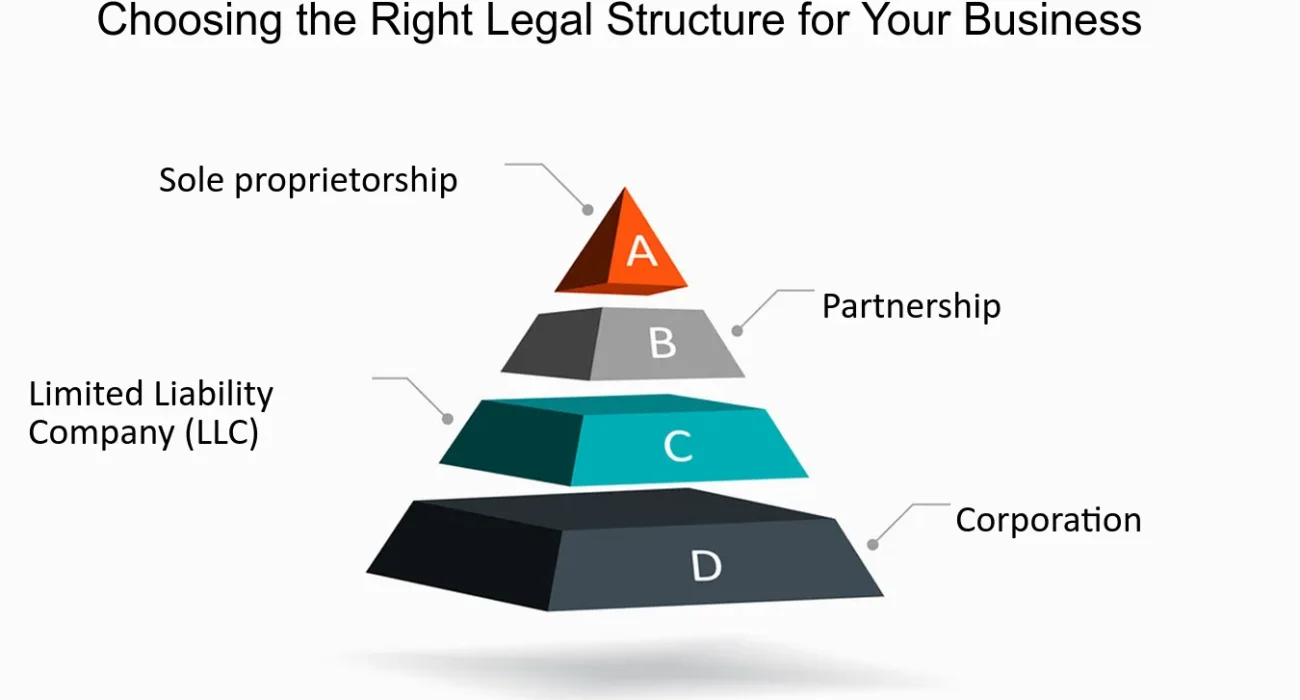
Starting a new business is exciting — it’s the moment when your idea begins to take shape in the real world. But before you open your doors or launch your website, there’s one critical decision that can impact your taxes, compliance requirements, funding opportunities, and even your personal liability: choosing the right legal structure.
In India, entrepreneurs have several options for structuring their businesses, each with its own advantages and obligations. Understanding these will help you choose a structure that aligns with your goals, resources, and long-term vision.
In this guide, we’ll break down the most common business structures in India, along with their pros, cons, and the factors you should consider before making a choice.
1. Sole Proprietorship
A sole proprietorship is the simplest form of business structure. It’s owned and operated by one person, and there’s no legal distinction between the owner and the business.
Pros:
-
Easy to set up with minimal documentation.
-
Complete control over decision-making.
-
Low cost of formation and compliance.
Cons:
-
Unlimited personal liability — your personal assets can be used to settle business debts.
-
Limited funding options, as investors typically prefer more formal structures.
-
Not suitable for businesses planning significant expansion.
Best for: Freelancers, consultants, and small traders starting out on a modest scale.
2. Partnership Firm
A partnership involves two or more people sharing ownership, profits, and responsibilities. Partnerships in India are governed by the Indian Partnership Act, 1932.
Pros:
-
Shared investment and workload.
-
Easy to establish compared to companies.
-
Flexible management arrangements.
Cons:
-
Partners have unlimited liability.
-
Risk of disputes if the partnership deed is unclear.
-
Dissolution can occur if a partner leaves or passes away.
Best for: Small businesses where trust between partners is high and capital needs are moderate.
3. Limited Liability Partnership (LLP)
An LLP blends elements of a partnership with the benefits of limited liability. It is governed by the LLP Act, 2008.
Pros:
-
Liability of partners is limited to their contribution.
-
Separate legal identity from the owners.
-
Lower compliance requirements compared to private limited companies.
Cons:
-
Not as attractive to certain investors compared to companies.
-
Some restrictions on raising capital.
Best for: Professionals, service providers, and small to medium-sized businesses wanting a balance of flexibility and protection.
4. Private Limited Company
A private limited company is one of the most popular structures for startups and growing businesses. It offers limited liability, a separate legal identity, and better access to funding.
Pros:
-
Limited liability for shareholders.
-
Easier to attract investors and raise capital.
-
Perpetual succession — the company continues even if shareholders change.
Cons:
-
Higher compliance requirements and costs.
-
Formal processes for decision-making and reporting.
Best for: Startups, tech companies, and any business with growth and funding ambitions.
5. One Person Company (OPC)
An OPC is designed for solo entrepreneurs who want the benefits of a private limited company without needing partners.
Pros:
-
Limited liability for the owner.
-
Separate legal identity.
-
Suitable for individuals wanting corporate status.
Cons:
-
Limited to one shareholder.
-
Cannot carry out certain types of businesses like NBFCs.
Best for: Solo founders who plan to grow their business but want to start small.
6. Public Limited Company
A public limited company can offer shares to the public and raise large amounts of capital.
Pros:
-
Access to significant funding through public investment.
-
Shares are freely transferable.
-
High credibility and market recognition.
Cons:
-
Extensive compliance and disclosure requirements.
-
Higher costs of incorporation and operation.
Best for: Large businesses aiming for expansion and possibly listing on the stock exchange.
Key Factors to Consider When Choosing a Structure
Selecting the right legal structure isn’t just about meeting current needs — it should also accommodate your future plans. Here are some factors to weigh:
-
Liability – Are you comfortable with personal liability, or do you want to limit your risk?
-
Capital Needs – Will you need to raise external funding? Investors often prefer companies over partnerships or sole proprietorships.
-
Compliance Requirements – How much time and resources can you dedicate to legal and financial reporting?
-
Control – Do you want to retain full control or share decision-making with others?
-
Taxation – Different structures have different tax implications. It’s wise to consult a professional to understand the impact.
-
Scalability – Will the structure support your growth plans in the next 5–10 years?
Why Professional Guidance Matters
While online resources can give you an overview, the best choice depends on your unique situation — including the industry you operate in, your risk tolerance, and your financial goals. A professional advisor can:
-
Assess your business model and recommend the most suitable structure.
-
Ensure proper registration and compliance from day one.
-
Help with tax planning aligned to your structure.
-
Guide you through funding, scaling, and regulatory requirements.
Final Thoughts
Your legal structure forms the foundation of your business. It determines how you operate, how you’re taxed, and how much personal risk you take on. Choosing the wrong one can lead to unnecessary costs, legal complications, or missed opportunities.
Taking the time to make an informed decision — with expert advice from a trusted advisory firm — is one of the smartest investments you can make before starting your entrepreneurial journey.
With the right structure in place, you’ll be well-positioned to focus on what matters most: growing your business and turning your vision into reality.